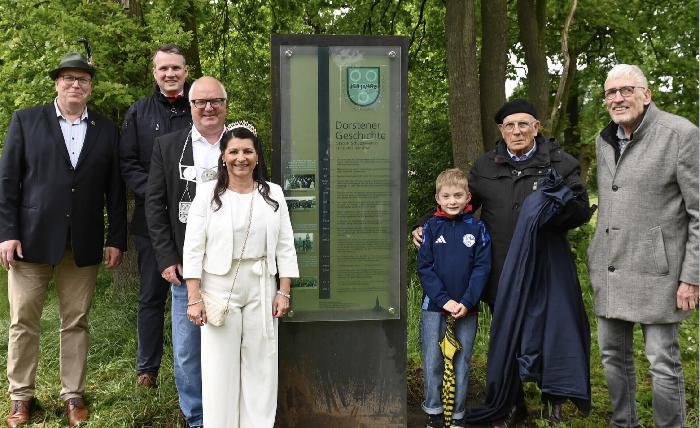
The General Citizens’ Shooting Club Holsterhausen-Dorf e. V. looks back on a history of more than 250 years and remains an integral part of social life in Holsterhausen to this day. Originating from an early protective community, the club now primarily represents tradition, fellowship, and living customs.
The following milestones provide an overview of important events and show how closely the club’s history is linked to the development of the village.
| 1609 | To regulate the course of the shooting festivals in the Herrlichkeit, Matthias von Westerholt, Lord of Lembeck, issued a set of shooting regulations. | |
| The “Boston Tea Party,” a protest by British colonists against the imposed tea tax, marks the beginning of the American independence movement. | 1773 | Men from the village of Holsterhausen and from Emmelkamp celebrate the first shooting festival. |
| 1861 | The marksmen’s brotherhood now calls itself a shooting corps. | |
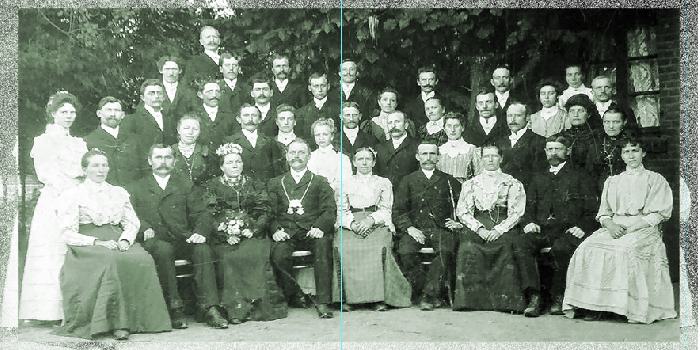
Throne in 1907 |
1866 - 1871 | Due to Prussia’s wars against Austria and France, the shooting festivals are cancelled. Afterward, they are celebrated again until the outbreak of the First World War in 1914. |
| 1918 |
Heinrich Schäfer, later headmaster of the Antonius School, founded a drum corps with several young people, from which the marching band later emerged. |
|
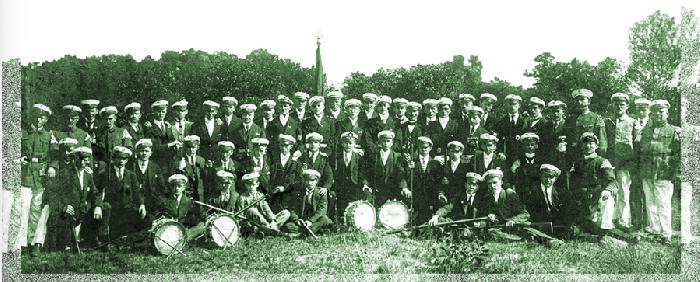
2nd Company Drummers, 1921 |
1921 | After the shooting festival, the assembly of marksmen decides on the name “Allgemeiner Bürgerschützenverein Holsterhausen near Dorsten an der Lippe.” |
| 1924 | The shooting club celebrates its 150th anniversary. Due to a misunderstanding, the gendarmerie forcibly clears the tent on the coronation evening. | |
| 1933 | By order of the Nazi authorities, the drum corps is forced to disband. Its instruments are confiscated. | |
| The chemist and later Nobel Prize winner Otto Hahn discovers nuclear fission. | 1938 | After years of disputes with the Nazi authorities, the shooting club dissolves and establishes a shooting group, which organizes the shooting festival in the following year. |
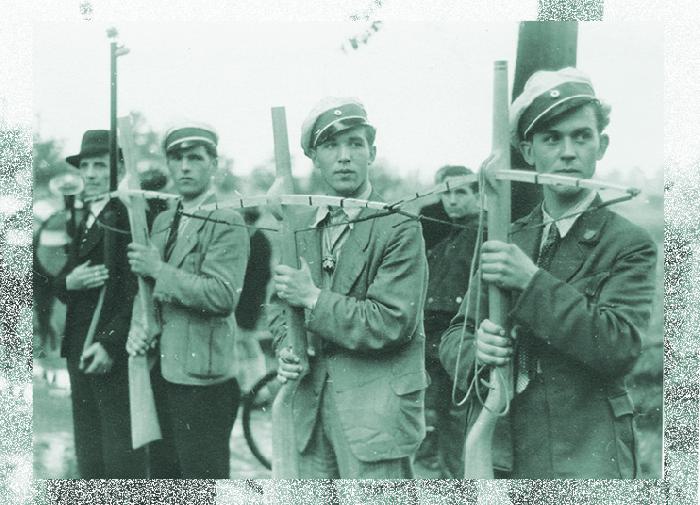
Crossbow shooters |
1948 | Holsterhausen celebrates the first shooting festival after the war. By order of the British military government, only crossbows may be used to shoot at the bird. The drum corps, later the marching band, and the shooting group reorganize and join the Allgemeiner Bürgerschützenverein. |
| On 17 June, around one million people in East Berlin and across the GDR protest largely peacefully against the political and economic conditions in the country. | 1953 | In “Holsterhausen Ost”, the Bürgerschützenverein Dorsten-Holsterhausen 1953 e. V. is founded. The clubs take turns celebrating a shooting festival every two years. |
| 1988 | The shooting group celebrates its 50th anniversary. | |
| 2000 | In consultation with the parish of St. Antonius, the shooting club decides to give the inscription on the memorial a contemporary meaning, redesign the surroundings, and erect a stele. | |
| 2018 | The marching band celebrates its 100th anniversary with a large-scale festive week. | |
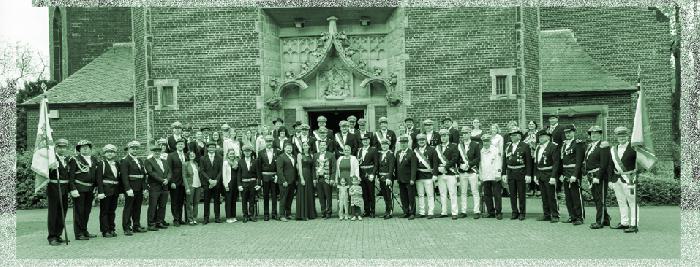
Throne 2024 |
2024 | A grand parade crowns the 250th anniversary celebration of the Allgemeiner Schützenverein Holsterhausen-Dorf e. V. |
Eröffnung:
14. Mai 2026
Adresse:
Geodaten:
51°40'50.3''N 6°56'16.5''E
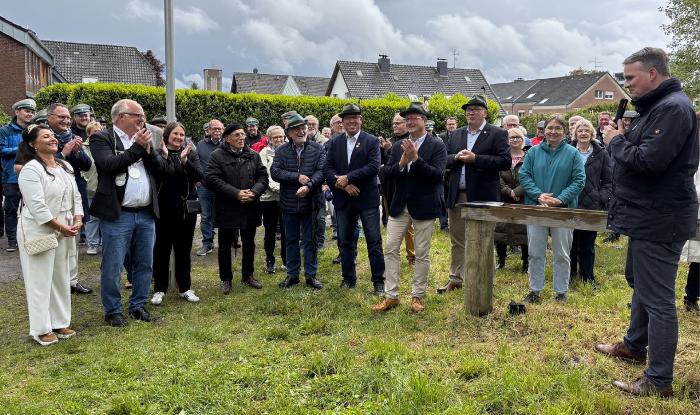
Eröffnung an der Festwiese
In his welcoming address, Mayor Tobias Stockhoff emphasized the special importance of the shooting tradition for the city of Dorsten. More than 8,000 citizens are members of the local shooting clubs. These clubs are not only guardians of traditions but also important places for social interaction. “They create a sense of community and provide places where people can meet,” Stockhoff explained.
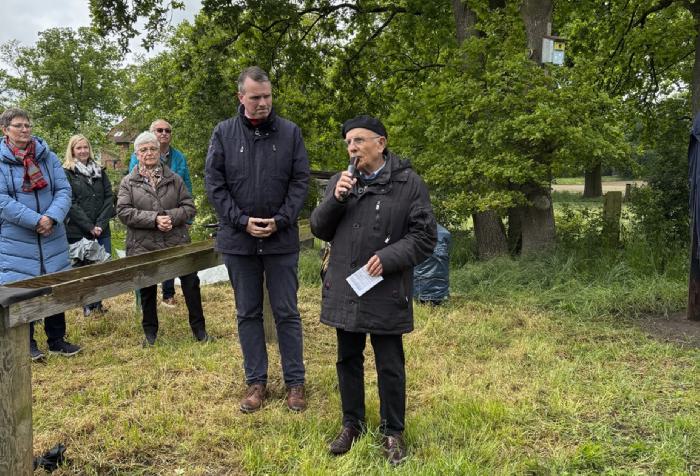
Hans Jochen Schräjahr
After the mayor’s welcoming address, Hans-Jochen Schräjahr from the Association for Local History and Heritage of Dorsten took the floor. With a smile, he remarked that Mayor Tobias Stockhoff had already anticipated large parts of his prepared speech. Therefore, he promised the guests only a “short speech from the perspective of a history expert” – and kept his promise.
In just a few words, Schräjahr spoke about the historical significance of the shooting tradition and the important role of Dorsten’s historical stations in keeping local history alive. In closing, he wished everyone present good health despite the changeable weather, so that all would be “fit for the upcoming shooting festival” and no one would catch a cold.